New Tech Changes Continuous Glucose Monitoring
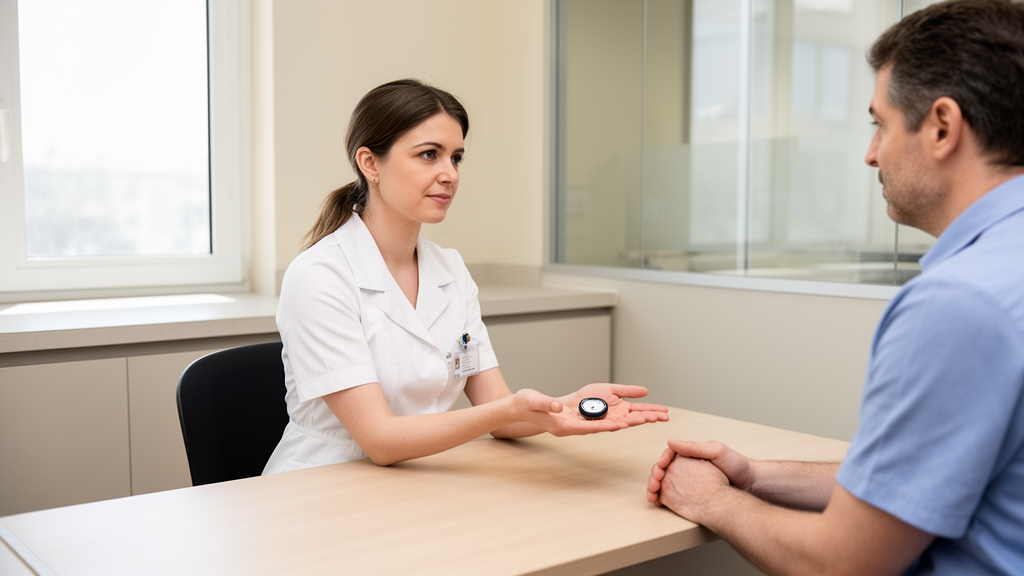
New updates in continuous glucose monitoring technology are changing how people track their health. These systems now connect to smartphones to show sugar levels in real time. This helps people manage their daily habits and food choices much faster than before.
What is a continuous glucose monitor?
A continuous glucose monitor is a small sensor that stays on your skin for several days. It measures the amount of sugar in your body every few minutes and sends that data to a device. This is different from old tools that only show your levels at the exact moment you prick your finger.
The system uses a tiny wire that sits just under the skin to read fluid levels. Most people wear these on their arm or stomach where they stay out of the way. Because it works all day and night, it can tell you if your sugar drops while you are sleeping or rises after a meal.
How does a continuous glucose monitor work?
- The sensor reads sugar levels in the fluid between your cells.
- A transmitter sends the data wirelessly to a phone or a small screen.
- The software creates a graph to show if your levels are going up or down.
- Alarms go off if your sugar reaches a level that might be dangerous.
Newer models are becoming much smaller and easier to apply at home without help. These devices help people see patterns they would never notice with a standard glucose meter used once or twice a day. Seeing the data as a moving line makes it much easier to understand how a walk or a snack affects the body.
Why do people need new glucose technology?
For a long time, checking sugar meant sticking a needle into a fingertip many times a day. This is painful and hard to do when you are at work, school, or out with friends. Modern tech makes the process nearly invisible so people do not feel like patients all the time. It gives them more freedom to live their lives without stopping for constant manual tests.
Doctors also get better information from these new tools because they see the full picture of a patient's week. Instead of just a few numbers, they see thousands of data points that show how the body reacts to stress and sleep. This leads to better advice and better health outcomes for everyone involved. As the tech gets cheaper, more people will be able to use it for general fitness and wellness goals.
What is coming next for sugar tracking?
Scientists are working on making these tools even better by removing the need for any needles at all. Some are testing a noninvasive glucose monitor that uses light or radio waves to see through the skin. If this works well, it will be as easy as wearing a regular smartwatch or a small patch. This would be a massive step forward for millions of people who need to watch their health every day.
We are also seeing more apps that use artificial intelligence to predict what will happen to your sugar in the future. The app might warn you that your sugar will be too low in an hour based on your current activity. This gives you time to eat a snack before you even feel bad. Watching these trends helps us see a future where managing health is simple, fast, and painless for every person.


Comments
Post a Comment